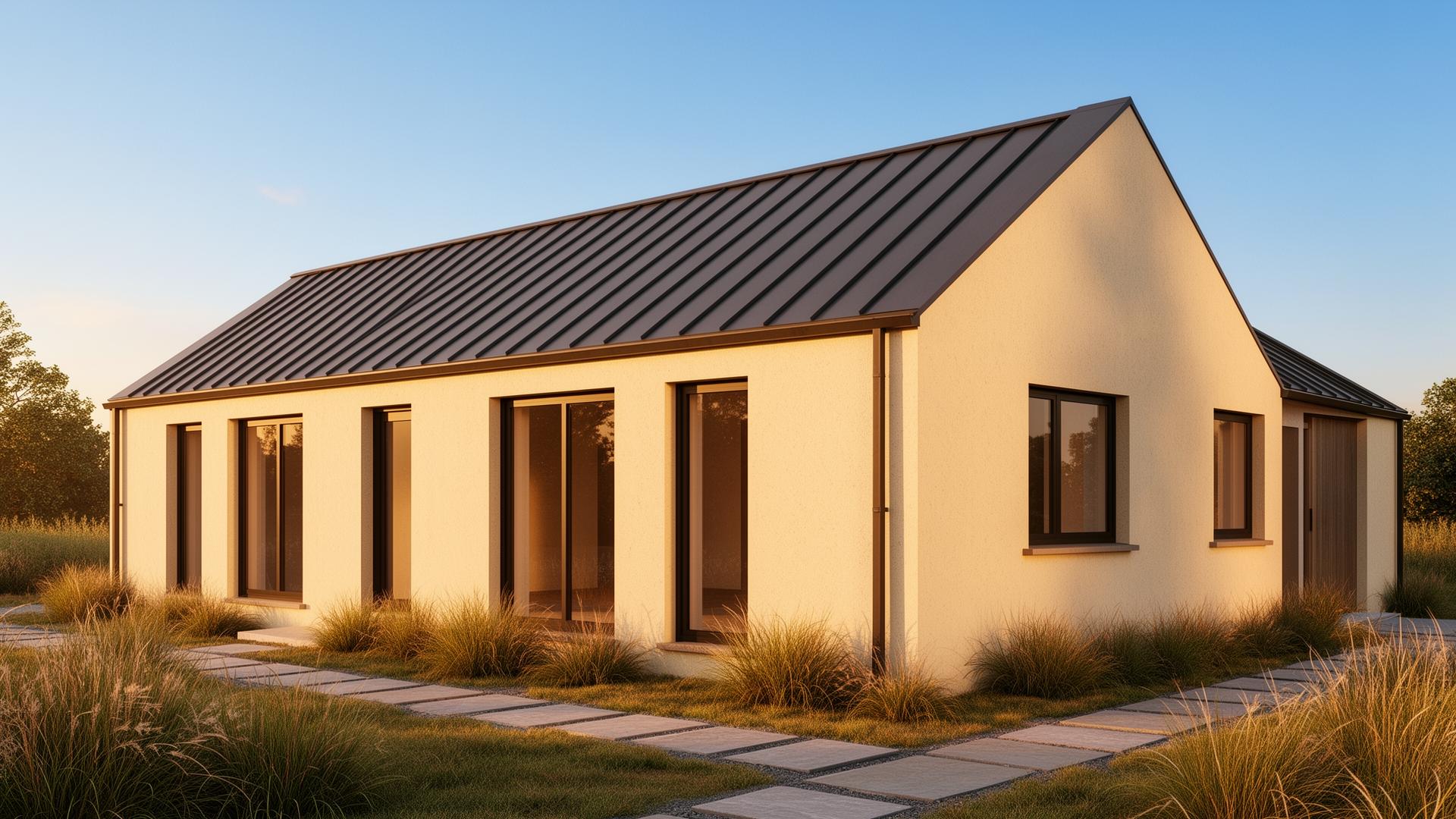
Healthy Home Design
Non-toxic architecture principles for low-VOC, mold-resistant, energy-efficient homes.
Healthy home design begins with material selection, continues through wall-system specification, and is verified through measurable indoor air quality outcomes. This guide walks through the principles we apply to every Mr Hemp House® project.
Eight Design Principles
Each principle is implemented as a specification, not a slogan. The combination produces a measurably healthier home.
Vapor-Open Wall Systems
Walls must breathe. Vapor-open assemblies built from hempcrete blocks, lime plaster, and clay finishes buffer humidity and prevent mold without relying on plastic vapor barriers.
Low-VOC Materials
Every material specified — adhesives, paints, finishes, cabinetry, flooring — is screened for VOC content. The goal is zero formaldehyde, no halogenated flame retardants, no phthalates.
Continuous Insulation + Thermal Mass
Combining insulation with mass smooths interior temperatures, reduces HVAC runtime, and lowers operating costs without sacrificing comfort.
ERV Ventilation
Energy Recovery Ventilation delivers continuous filtered fresh air while recovering heat or coolness from exhaust air. ERV is non-negotiable in a tight, healthy home.
Daylight and Biophilic Layout
Floor plans are oriented to capture daylight, frame views, and connect occupants to nature. Window placement, ceiling height, and material texture all support occupant wellness.
Right-Sized Mechanicals
A low-load envelope allows smaller, quieter, more efficient HVAC and water-heating equipment. Right-sized systems run less often, last longer, and produce healthier indoor conditions.
Water Quality and Filtration
Whole-house water filtration, lead-free plumbing, and high-quality fixtures are part of the design from the start, not a remodel afterthought.
EMF and RF Awareness
Wiring layout, fixture selection, and Wi-Fi placement are coordinated with the design to minimize unnecessary electromagnetic exposure in sleeping areas.
How Healthy Home Design Differs From Standard Construction
Standard residential construction is optimized around cost-per-square-foot and code minimums. Healthy home design is optimized around occupant outcomes — air quality, humidity stability, acoustic calm, thermal comfort, and long-term durability. The two paths use overlapping materials in places but diverge significantly on wall systems, finishes, mechanicals, and verification.
The wall is the largest single decision. We specify hempcrete blocks, cast-in-place hempcrete, or GaiaCrete™ a hempcrete / hemp-lime building material alternative as the enclosure material — never closed-cell spray foam, never unfaced fiberglass behind a polyethylene barrier. The finish system is breathable lime or clay plaster, never vinyl wallpaper or solvent-based paint.
The mechanical system follows the envelope. A low-load envelope allows smaller HVAC equipment, quieter operation, longer equipment life, and continuous ERV ventilation. The combined effect is an indoor environment that supports sleep, cognition, and recovery rather than fighting the occupants' biology.
Verification matters. The HomeHealthScan™ tool benchmarks indoor conditions before and after design changes, so the impact is measurable rather than asserted. For projects starting from an existing house rather than a vacant lot, the same principles apply through our retrofit and renovation path.